To Repay Early or Not To Repay Early...
Using data science forecasting models, we uncover the mathematical truth about UK student loan repayments and why conventional wisdom might be costing you thousands.
In This Article
The Anxiety-Inducing Balance
If you have a student loan in the UK, you've likely felt a jolt of anxiety checking your balance. That number seems to have a life of its own, growing relentlessly year after year due to eye-watering interest rates. The natural impulse? To forget about it till next month… And the next. Some may feel the compulsion to pay it off early with any spare change they have.
But what if that drive to be "debt-free" is actually a costly mistake? Using a custom-built forecast, I've modelled the long-term trajectory of UK student loans across different plans and career paths.
The results challenge everything you think you know about debt, revealing that student loans might not act as loans for the majority of us, and paying it off early can be one of the best or worst decisions of your life!
The Core 4 Plans
The UK has a confusing system of multiple plans running at the same time. Each plan has its own features:
Repayment Threshold
The income level where you start paying off your student loan
Repayment Rate
The % of your income above the threshold that goes towards your loan
Interest Rate
The interest charged on the total balance of your student loan
Write-off Period
After this time, remaining debt is completely forgiven
Key Insight
The student loan system is not a classic "loan" - it's a graduate contribution scheme. You only repay when you earn above the specific threshold. Because of high thresholds and write-offs, most graduates will not repay their full loan.
Plan Comparison
| Feature | Plan 1 | Plan 2 | Plan 4 | Plan 5 |
|---|---|---|---|---|
| Who it's for | Pre-2012 England & Wales, N. Ireland | 2012-2023 England & Wales | Post-1998 Scotland | Post-2023 England & Wales |
| Threshold | £26,065 | £28,470 | £32,745 | £25,000 |
| Repayment Rate | 9% | 9% | 9% | 9% |
| Interest Rate | RPI only (3.2%) | RPI + up to 3% | RPI or Base+1% (lower) | RPI (6.25%) |
| Write-off | 25 years | 30 years | 30 years | 40 years |
Loan or Tax?
For graduates on middle and lower incomes, they will not repay their full loan + interest. We can then imagine that the effective interest rate paid is zero. As their debt is still growing and will be written off, we can imagine the student loan repayment as an additional form of taxation.
Real World Example
For a Plan 2 graduate earning £35,000, their marginal tax rate is not just20% income tax + 8% National Insurance, but actually 20% + 8% + 9% = 37% when including student loan repayments.
Modelling the Future
Forgetting the scary headline figure of your balance, the true cost of your loan isn't determined by the amount you borrowed, but by a high-stakes race that plays out over your career: the race between your repayments and the interest piling up.
Our Methodology
To see which wins this race, we run a comprehensive forecast that projects your loan's journey over 30 to 40 years, based on:
- Starting Balance
- Career Trajectory & Salary Growth
- Specific Rules of Your Plan
- Monthly Compound Interest
- Inflation & Time Value of Money
What the Data Reveals
In 2025, the average student loan debt of a new grad is £53,000. The average graduate starting salary is £32,000. Taking these figures, our forecast for a Plan 2 average grad shows:
Plan 5 Forecast: Balance Over Time
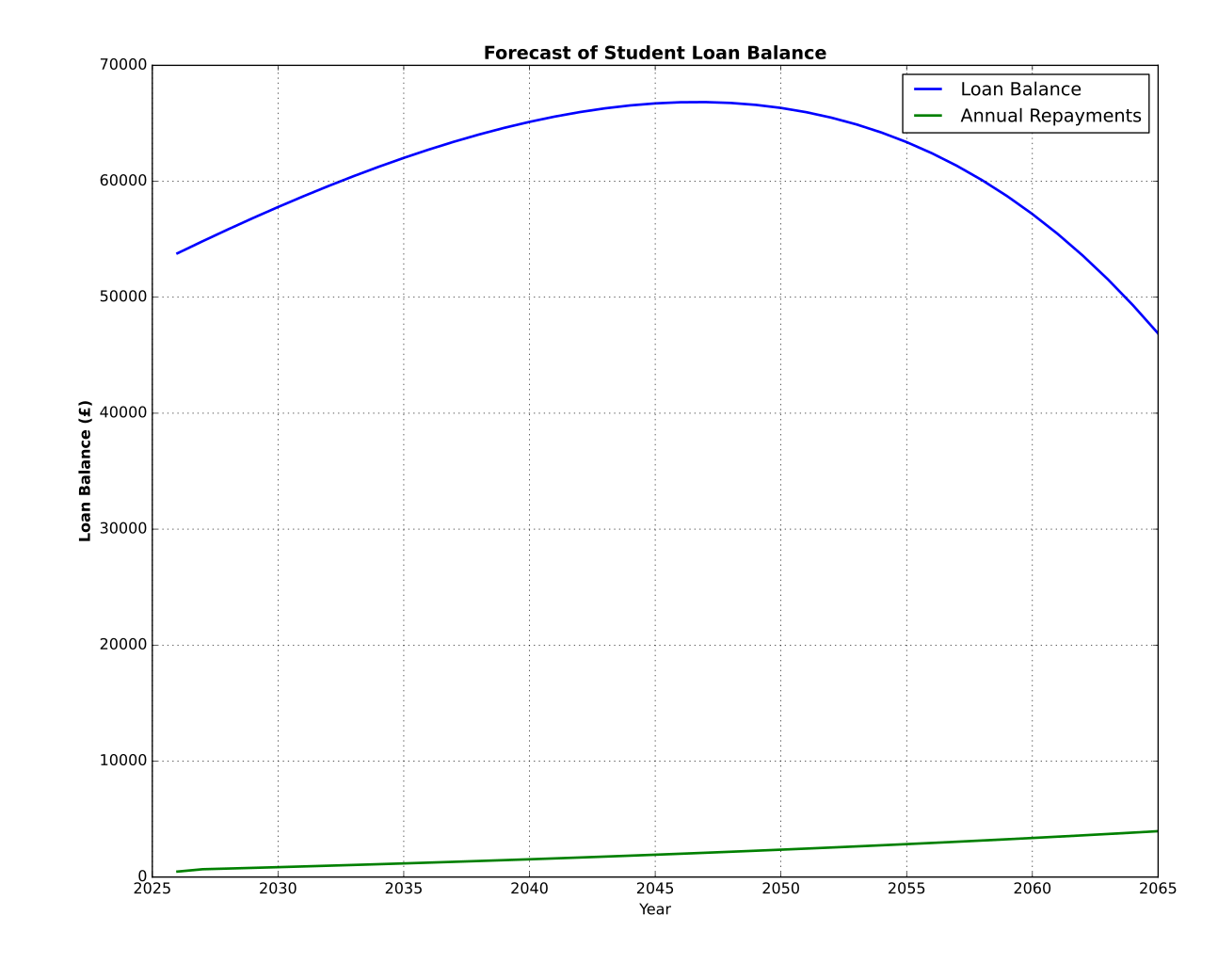
The graph shows loan balance steadily increasing in early years as interest outpaces repayments, followed by a gradual decrease as career progression increases repayment amounts.
Critical Finding
The value of money over time is an important consideration. A pound spent 30 years from now is worth less than its value today. When we calculate the present value of all repayments, paying an additional £1,000 annually can actually make you worse off!
Impact of Early Repayments
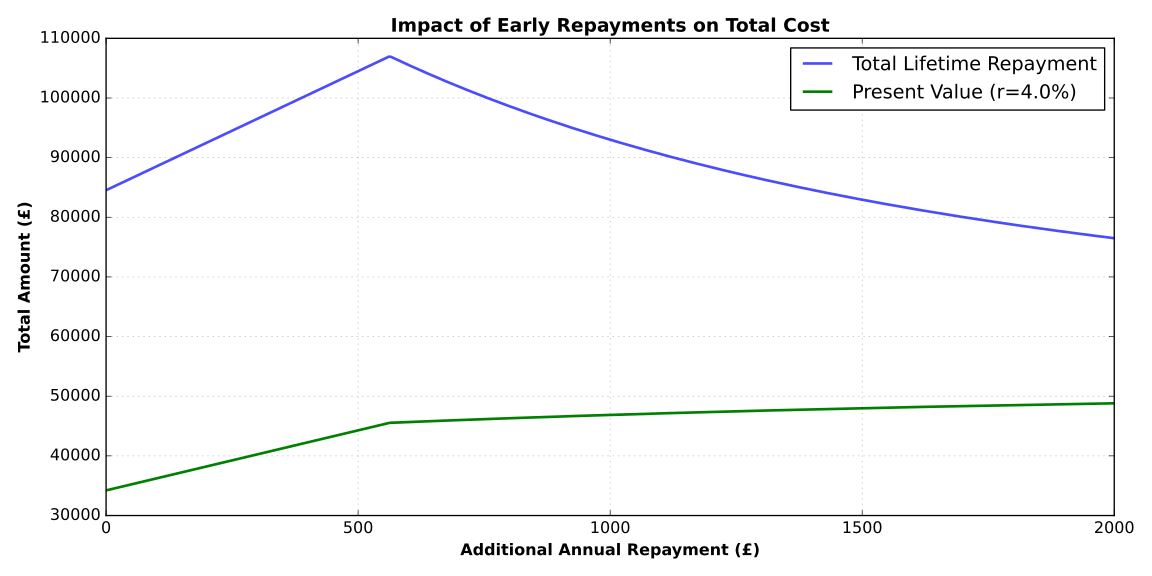
This graph reveals a surprising trend: moderate voluntary payments can increase your total cost before eventually becoming beneficial at higher amounts.
What Should I Do?
Don't Repay Early If:
- You're on Plan 2 or Plan 5
- Your salary is below £50,000
- You don't expect rapid salary growth
- You have other debts or investment opportunities
- Your loan balance is growing despite payments
Consider Early Repayment If:
- You're a high earner (£60,000+)
- Your salary is growing rapidly
- You're on Plan 1 or Plan 4
- You'll repay the full amount before write-off
- Peace of mind is worth the cost to you
For most graduates, especially those on Plan 2 or Plan 5, the forecast reveals that for the first decade, or even two, of their career, their monthly repayments aren't enough to cover the annual interest. The debt continues to grow, not shrink. The loan is finally wiped out after 40 years.
Final Takeaways
For most graduates on Plan 2 or Plan 5, paying off student loans early is not financially advantageous due to the structure of repayments and interest rates.
Graduates on Plan 1 or Plan 4, with lower interest rates and shorter write-off periods, may find early repayment more beneficial.
High earners should carefully evaluate their career trajectory and consider opportunity costs before deciding to pay off student loans early.
Individual circumstances vary significantly. It's essential to assess personal financial situations and goals when making decisions about student loan repayments.
Try It Yourself!
I've built a comprehensive Student Loan Calculator that allows you to input your own details and see the personalized forecast for your situation. While it won't be 100% accurate, you can experiment with different annual repayments to see how it changes your total repayments and final balance.
Student Loan Calculator
Input your details to see your student loan repayment forecast
Loan Details
Summary
Tip: Your loan will be written off with a remaining balance. Consider if early repayment is beneficial.
Loan Balance Forecast
Salary & Interest Rate Projection
Found this helpful?
Share this analysis with others who might benefit from it